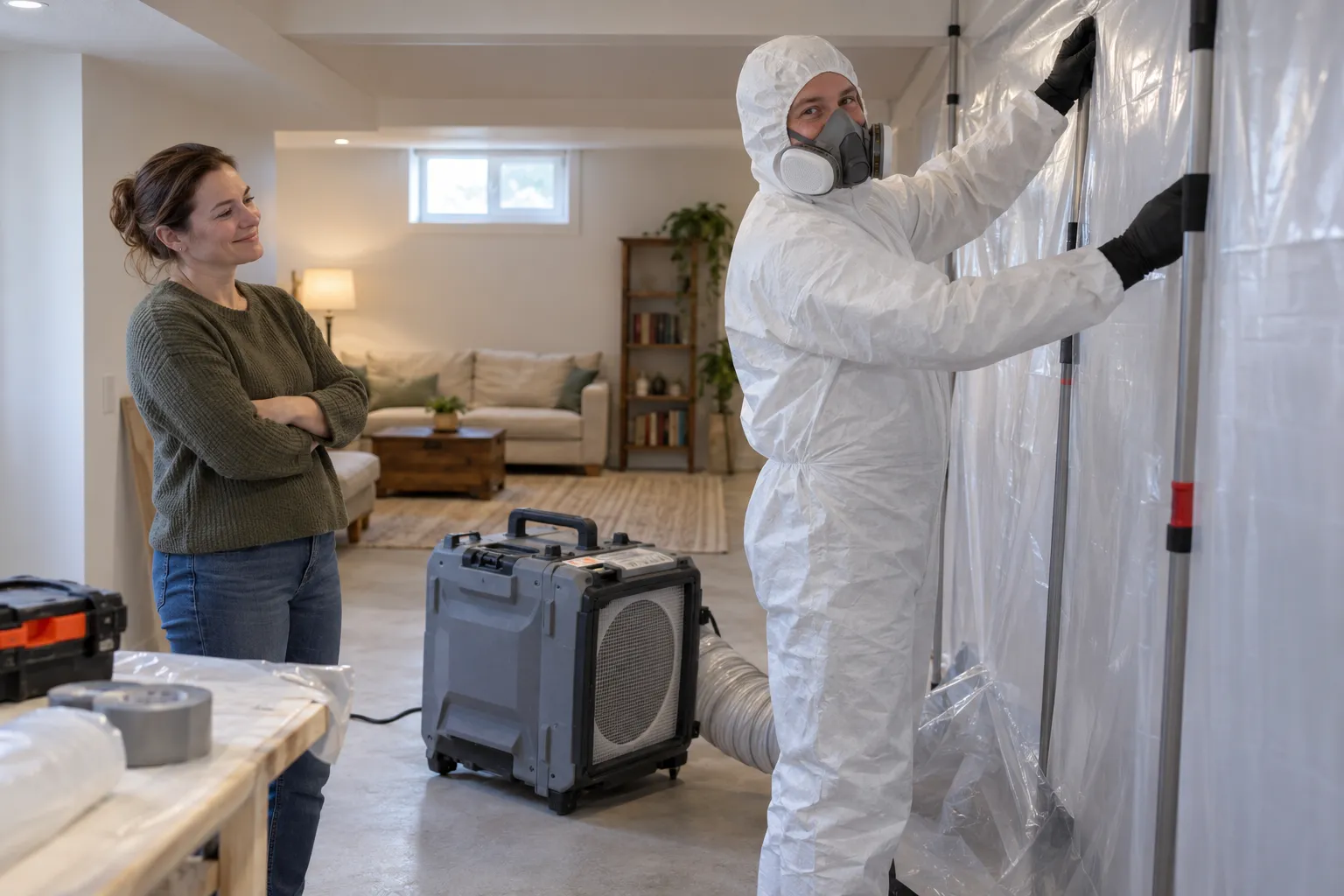
Mold Remediation for Homes in Chicago
Request an estimate today
Mold remediation is the careful process of finding mold, sealing it off, removing it and fixing what let it grow. It is more than a surface wipe. A good job protects the air in your home and the materials behind your walls. Leadershipdecisions Mold Help is a referral service. We connect homeowners in the Chicago area with independent local providers who do residential mold removal. The provider does the work, and you stay in charge of the decisions.
Homes here deal with cold winters, hot humid summers, spring flooding and damp basements. Those swings give mold plenty of chances to start. Doing the job right keeps your house sound and helps protect its value at resale. Request an estimate to compare plans in writing. Ask the right questions, and pick a provider who explains each step in plain words.
Found Mold? Start Here
Is this really mold, and what do you do first? Take a breath. This is common, and it is fixable.
Stay out of the area if you can. Do not scrub it dry, aim a fan at it or paint over it. Those moves can spread spores or hide the problem. Then look for a local provider who handles residential mold removal and will put the plan in writing.
Move a little faster if you see any of these:
- Mold covering more than a small patch
- A musty smell that keeps coming back
- Active leaks or standing water
- Someone at home with breathing trouble or allergies
If anyone feels unwell, talk to a doctor too.
Why Does Mold Get Worse the Longer It Sits?
Mold needs three things: moisture, food and time. Drywall, wood and dust are food. A leak or damp air is the water. Time is the part you can still change.
Deep frost, spring melt and humid summers keep many basements and crawl spaces damp. A small patch on a basement wall can creep behind paneling or into framing. The longer it spreads, the more material a provider may need to remove. Acting early keeps the job smaller and the home in better shape.
What Does Mold Remediation Include?
What will a provider actually do? Plans differ, but a solid one usually covers these steps:
- A look at how far the mold has spread, including hidden spots
- Sealing off the work zone
- Air filtering with HEPA equipment
- Removing materials that cannot be cleaned, such as soaked drywall
- Cleaning and drying the materials that can stay
- A final check that the area is dry and clean
Dark growth is often called black mold. Black mold remediation follows the same careful steps. Color alone does not tell you how risky it is, so do not rely on it.
Why Does Containment Matter So Much?
Can cleanup make things worse? Yes, if it is done carelessly. Digging into mold throws spores into the air. They can land in clean rooms and ductwork.
Providers use plastic sheeting, sealed doorways and air machines that pull air out of the work zone. Ask how they will protect the rest of the house. A clear answer is a good sign. A shrug is not.
How Is the Moisture Source Fixed?
Will the mold come back? It can, if the water problem stays. Fix the source first. Otherwise you are just cleaning up a repeat.
Common sources include a leaking pipe, a roof leak after hail, poor grading, a weak sump pump or damp air in a closed crawl space. Some providers handle the repair. Others will point you to a plumber, roofer or waterproofing pro. Either way, ask for the cause in writing.
Do You Need Testing First?
Not sure you have mold at all? That is where an inspection helps. A search for mold inspection near me will turn up plenty of options. Certified mold testing can show what is present and where it is. It also gives you a clear before-and-after picture. Remediation is the cleanup step that follows.
Will Insurance Help?
Some policies may cover sudden damage, like a burst pipe. Slow leaks and long-ignored damp spots are often treated differently. Check your policy and ask your agent before work begins. Providers can often help document damage with photos and notes for a claim.
How Do You Choose a Provider With Confidence?
What should you ask? Ask the right questions. Here are a few, and what a good answer sounds like:
- Can I see a written scope of work? You want rooms, materials and methods listed.
- How will you contain the area? Listen for sealed barriers and HEPA air filtering.
- How will you find the moisture cause? A good answer names a way to check, not a guess.
- Are you licensed and insured where required? Ask for proof. Rules vary by state.
- How will we know it is done? Look for a final check or clearance testing.
Red flags include pressure to sign on the spot, a price with no scope, and a promise that one spray kills all mold. Get more than one written quote.
What Happens After the Work Is Done?
How do you keep mold from returning? Keep indoor humidity roughly between 30 and 50 percent. Run a dehumidifier in damp basements. Test your sump pump before spring. Clean gutters and point downspouts away from the foundation. Watch for musty smells and new stains.
Keep every report, photo and invoice in one folder.
How Does This Protect Your Home's Value?
Why bother with all that paperwork? Buyers and inspectors ask about past moisture. A documented job with the cause fixed tells a clean story. A quick cover-up tells the opposite. Protect the home now, and it pays off at resale.
Ready for the next step? Request a callback to check provider availability in your area.
What's Included
Full Mold Assessment
The provider maps where mold has spread, including hidden areas behind walls, under floors and near plumbing.
Sealed Work Zone
Barriers and filtered air machines help keep spores from drifting into the rest of your house.
Safe Removal
Damaged materials come out, and salvageable surfaces get cleaned and dried.
Final Check Afterward
The provider confirms the area is dry and clean, and may suggest follow-up testing.
What Does Remediation Cost?
Prices vary a lot by size, materials and access. These are typical U.S. ranges, not quotes. Your home may fall outside them. Ask each provider for a written quote that lists exactly what is included.
| Item | Typical range | Notes |
|---|---|---|
| Small area (under 10 sq ft) | $500 – $1,500 | Often one wall or ceiling patch |
| One room | $1,500 – $4,000 | Depends on drywall and flooring removal |
| Finished basement | $3,000 – $10,000 | Larger if water or flooding is involved |
| Crawl space | $500 – $4,000 | Access and moisture control change the price |
| Attic | $1,500 – $6,000 | Roof leaks and insulation add to the work |
| Moisture source repair | $500 – $3,000 | Plumbing, grading or sump work may be separate |
How It Works
Tell Us What You See
Share where the mold is, how big it looks, and whether there has been a leak or flood.
Get Matched Locally
You are connected with an independent provider in our network who handles residential mold removal.
Review the Written Plan
Compare the scope, the price range and how the provider will fix the moisture source.
Confirm the Cleanup
After the work, ask for a final check and keep your paperwork for the future.
Why Call Leadershipdecisions Mold Help
Local Providers
Independent providers in our network know the basements, frame houses and bungalows common in this area.
Clear Plans
Ask each provider for a written scope so you can compare options side by side.
Honest Referral
Leadershipdecisions Mold Help only connects you. Providers do the work, and you make the final choice.
No Obligation
Request an estimate and decide on your own time.
Other Services
Need mold remediation in Chicago?
Found mold or a musty smell? Tell us what you see and we will point you to a local provider in our network. Request an estimate or email contact@leadershipdecisions.living.
No obligationMold Remediation FAQ
Can I just clean mold myself with bleach?
Small surface spots on hard materials may be cleaned with care. Bleach often does not reach mold roots in porous materials like drywall or wood. For larger areas, ask a provider before you start.
How long does mold remediation take?
Small jobs may take a day or two. Larger jobs with drywall removal and drying can take a week or more. Ask the provider for a timeline in writing, since it depends on the size and the cause.
Does homeowners insurance cover mold removal?
Some policies may cover mold that follows sudden damage, such as a burst pipe. Many exclude long-term leaks or neglected damp areas. Check your policy, and ask providers to help document the damage for a claim.
Tell us what happened
Found mold or a musty smell? Tell us what you see and we will point you to a local provider in our network. Request an estimate or email contact@leadershipdecisions.living.
No obligation